

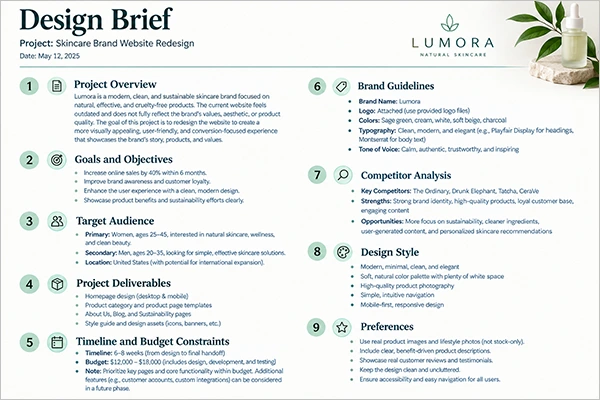
A design brief is a document that outlines the project goals, objectives, scope, expectations, intended outcome, and creative direction of a design project. It gives the design team a clear picture of what needs to be created, who it is for, and the measurable outcomes that a client is expecting out of this project.
According to the Design Council, every £1 invested in design can generate up to £20 in return, which makes it important to outline a clear direction for the design brief. It aligns stakeholders, sets expectations of desired results, lists deliverables, and helps minimise costly revisions, delays, and resource expenditure. To learn how to prepare a design brief, its core elements, benefits, templates, examples, best practices, and common mistakes, follow the article.
What is a Design Brief? How Is It Different From a Creative Brief?
A design brief is a written description of what a new project or product should do, what is needed to produce it, how long it will take, etc.
In simpler words, a design brief is a document that outlines a project’s goals, objectives, target audience, constraints, and guidelines, providing designers with a roadmap to understand the client’s expectations, intentions, desired outcomes, and business goals.
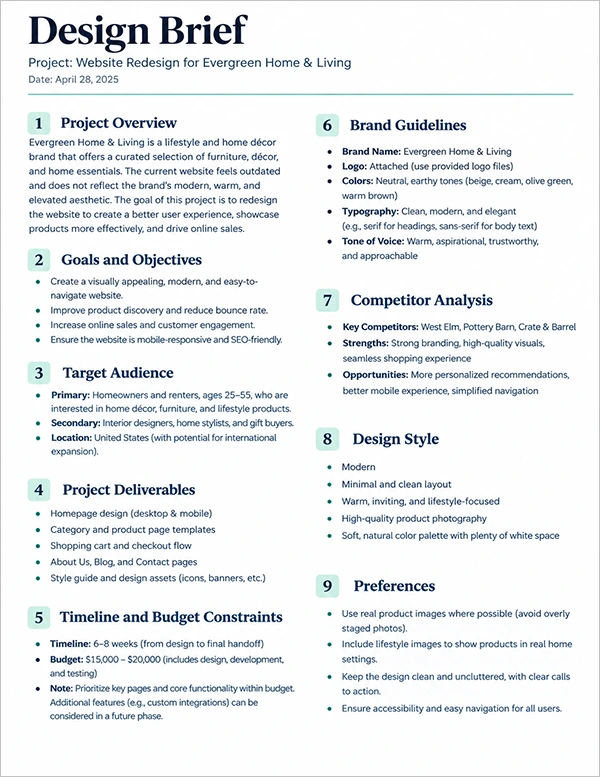
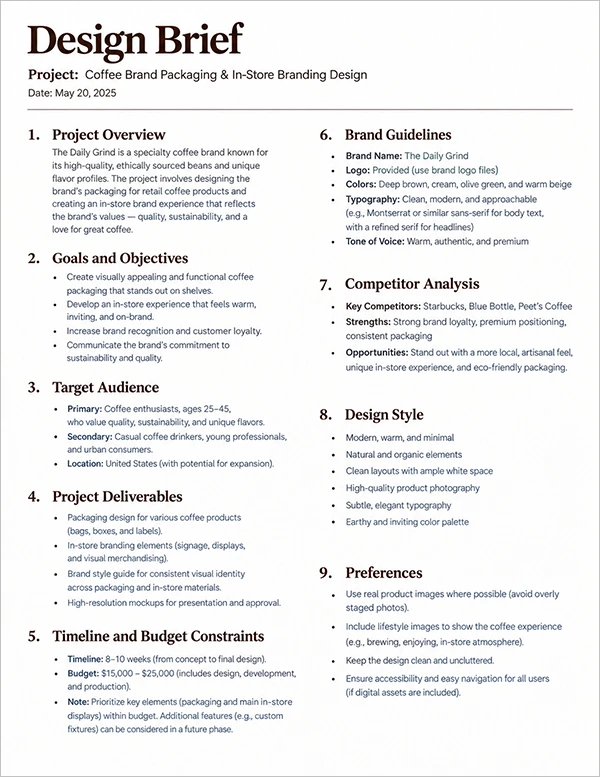
The key elements of a design brief include:
| Key Elements of Design Brief at a Glance | ||
|---|---|---|
| S No. | Design Brief Elements | What is Included? |
| 1. | Project Overview | Brief introduction of the project and what it is expected to accomplish; desired goals. |
| 2. | Goals and Objectives | Quantifiable goals (the overall purpose) and objectives (desired result or outcome) |
| 3. | Target Audience | The specific audience, their characteristics, and preferences for whom the project is undertaken. |
| 4. | Project Scope and Deliverables | Expected deliverables and a clear outline of what needs to be included and excluded. |
| 5. | Timeline and Budget Constraints | Clear boundaries about the short- and long-term deadlines and the financial limitations. |
| 6. | Brand Guidelines | Specific guidelines concerning color, logo, typography, etc., to ensure consistency with the brand’s identity. |
| 7. | Competitor Analysis | Identifying the competitor and its SWOT analysis. |
| 8. | Design Style and Preferences | Brand’s preferred design, colour, logo, typography, and style. |
Difference Between Design Brief and Creative Brief
Although design briefs are generally considered a part of the creative brief, here are some major points of difference between the two:
| Factors | Design Brief | Creative Brief |
| Primary Focus | Outlines the design project’s goals, objectives, and desired outcomes. | Presents the creative strategy, idea, and communication direction. |
| Purpose | To offer a design direction to the team based on brand guidelines, target audience, market trends, and preferred style and design. | To guide the creative team in developing a broader creative concept for marketing. |
| Users | UI/UX designers and teams | Marketing teams, copywriters, and creative teams |
| Common Use | Used to design websites, logos, apps, or other design projects. | Marketing and advertising campaigns. |
How to Write a Design Brief? Step-By-Step Process and Examples
First, gather key information, such as your target audience and the challenge you want to address. Set a goal, finalise the budget and timeline, and establish an approval process.
Here’s a step-by-step process for writing an effective brief:
Step 1: Identify the Project Goal
The first step to writing a design brief includes gathering relevant information and defining the scope and goal of the project. It includes explaining what the project is and what it needs to accomplish.
For example: If you’re creating a user interface design for a fitness brand, then first, gather the relevant information about the target market, preferences, and needs. Then, define a clear, relevant, and actionable goal.
Step 2: Identify the Target Audience
Clearly identify and define your target audience and provide relevant information about their characteristics, online behavior, preferences, and other demographic information.
Tip: Instead of writing just “men and women,” give a detailed description, “young professionals, aged 25-35, looking for affordable fitness clothing brands”.
Step 3: Mention the Deliverables
The next crucial step is to outline the deliverables, or every major asset that needs to be created. The key is to list every specification (format, colour palette, typography, dimensions, export format, etc.).
It aims to avoid ambiguity and misunderstanding between teams. Being clear and detailed about the technical specifications allows both parties to understand the project’s scope.
For example, you’re creating a logo for a fitness brand, then:
- Create a primary logo mark in yellow and red colour.
- Provide final files in PNG, JPG, and PDF format.
- It should work across social media, packaging, and print.
- Minimum digital size: 200*200 px
Step 4: Establish Budget, Timeline, and Visual Direction
Establishing budget, timeline, and visual direction includes the following steps:
- First, understand the client’s requirements, design and style preferences, and existing guidelines.
- Create mood boards, take references, analyse competitors, and identify the designs that communicate the intended direction.
- Make a realistic timeline. It may be short-term deadlines or a long-term final deadline.
- Allocate a realistic budget for the project.
For example: You’re establishing a budget and timeline for a banking app redesign, then:
- Budget: INR 4,00,000
- Timeline: 2.5 months (Break it into weekly revisions as detailed below in the core components)
Step 5: Establish the Approval Process
To avoid misunderstanding, clearly define the stakeholders responsible for approval, feedback, and final decision. It reduces delays caused by unclear responsibilities.
For example, you’re designing product packaging, then:
- Brand Manager: Review the initial three packaging options.
- Marketing Team: Consolidate feedback within three business days.
- Design Team: Revisions based on feedback.
- Marketing and Product Head: Final approval.
What Are the Core Elements of a Design Brief?
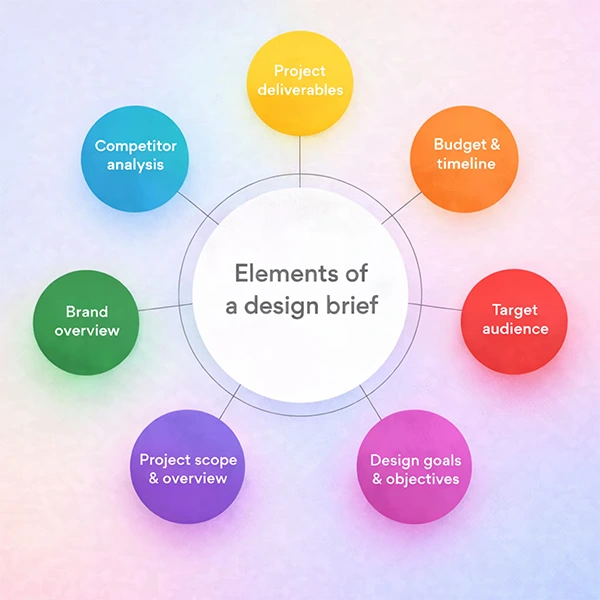
Project overview, goals and objectives, target audience, project deliverables, timeline and budget constraints, brand guidelines, competitor analysis, design style, and preferences are the core elements of a design brief.
1. Project Overview
A project overview must provide a brief introduction to what is being created and what it is expected to accomplish. It should include:
- Purpose: Why is this design project being created, and what goals is it expected to achieve?
- Description: An informative description of what needs to be achieved and its scope.
- Context: Basic context of what the organisation wants to create and what challenges it aims to address.
Example of Project Overview:
“The company is redesigning its website (purpose).
as the current website does not appeal to the young audience (Context).
The aim is to create a modern user experience and make its product information easier to gather.” (Description).
2. Project Goals and Objectives
Project objectives must underline the business goals that the design project is intended to achieve. It may be design-specific objectives (increasing brand awareness, adding modern appeal, etc.) or user-centric (improving customer satisfaction, user experience, and navigation).
The key is to describe a measurable or clearly defined outcome wherever possible. Common objectives may include:
- Increasing brand awareness
- Generate more leads
- Appeal to a modern audience
- Improve navigation and user experience
- High conversion rates and website traffic
Hence, it must include goals (the overall purpose of the project) and objectives (what the project aims to achieve).
Example of Project Goals and Objectives:
“Increasing website engagement by 20% in Q2 (objective) by redesigning the website. (goal)
“Reducing bounce rates by 10% (objective) with clear content and simple navigation. (goal)
3. Target Audience
The target audience briefly describes the people organisations choose to attract and interact with through their final design. Knowing the target audience’s behavior, preferences, and needs helps tailor personalised experiences.
This may include information such as
- Demographic Information (Age, Gender, Location, Income, etc.)
- Psychological Traits (Hobbies, Interests, Lifestyle)
- Online Behavior
- Needs and Preferences
- Problems the Product or Service Solves
- Competitor Analysis
- User Touchpoints (Where the Audience Interacts: Social Media, Stores, Websites, etc.)
Example of the Target Audience:
“Young working professionals and college students, age 20-35 (Demographic Details), interested in budget-friendly fitness, weight management, healthy eating, and daily workouts. (Needs and Preferences)
4. Project Deliverables and Scope of Work
Clearly outlining the specific deliverables expected from the design team is another element of the design brief. The scope of work underlines what is included in the project as well as what is excluded. It helps prevent misunderstandings and scope creep and keeps the teams aligned.
The deliverable and scope of work mandate specifying:
- Design Deliverables: The tangible output the project will produce—for example, logos, social media templates, graphics, website pages, etc.
- Design Components: Outline the specific features, such as colour, typography, types of logos, etc.
- Stakeholders and Deadlines: Specify the clear deadline and who will manage approval, feedback, and final decision.
- Technical Specifications: File size, export format, pixel dimensions, typography rules, etc.
- Functional Requirements
- Clear Exclusions
The key is to keep the list detailed so there is no room for ambiguity.
5. Timeline and Budget Constraints
Clearly outline the financial and time constraints while deciding the parameters of the project. It ensures timely project completion, uses the resources efficiently, and meets the client’s expectations.
Tip: Instead of creating one deadline, break down the project into smaller deadlines, such as first-round review, revisions, final approval, and delivery of the final project. It keeps the team motivated and ensures regular check-ins.
How to Mention Time and Budget Constraints in the Design Brief?
The right format for budget is:
- Budget: INR 3,00,000
For the timeline:
- Week 1-3: Research and Strategize
- Week 4-6: Develop the Initial Design
- Week 7-9: Stakeholder Review, User Testing, and Revisions
- Week 10-12: Final Design, Ready Deliverables, and Complete Project Handoff
6. Brand Guidelines
Every brand has its own guidelines, and if the project is for an existing guideline, ensure outlining and adhere to the established guidelines about how it should be portrayed in a brand design process.
The brand guidelines may include:
- Brand Colours
- Typography
- Graphic Elements
- Logo
- Colour Palette
- Communication Tone
- Other Visual Elements
It’s a crucial point in a design brief, as any major changes to established guidelines may hamper the brand’s recognition and identity in the minds of the audience.
Example of a Brand Guideline for Design Brief:
“Use the existing blue and yellow colour palette, Inter typography, and primary logo without modifications. Keep the design clean and consistent with brand identity.”
7. Competitor Analysis
Competitor analysis is essential to find out their strengths and weaknesses and identify where you can tap the market by overcoming the major gap or challenge in a competitor’s brand.
It should include:
- Key Competitors
- Strength and Weakness
- Features and Experiences
- Gaps and Opportunities
Example of How to Do Competitor Analysis in Design Brief:
For example, if Starbucks prepares a design brief, then it would look like:
- Cafe Coffee Day (CCD): Known for strong recognition and accessible pricing (strength), it has low brand loyalty, faces stagnant menu innovation, and inconsistent outlet ambiance (weakness).
- Tim Hortons: Although a recognisable international brand (strength), it has a smaller presence in India (weakness). Starbucks must create a connected experience to stay relevant (opportunity).
8. Design Style and Preferences
Clearly outline the desired visual direction, including the colour palette, logo, typography, etc., without unnecessarily restricting the designer’s creative process. It may include:
- Mood Boards
- Visual References
- Competitor Examples
- Links to Relevant Designs
This element of the design brief should be crafted carefully to communicate the desired expectations to the design team.
Design Brief Templates
What Are the Benefits of a Design Brief and Who Creates a Design Brief?
By reducing unnecessary revisions, delayed and vague feedback, and unclear expectations, a design brief allows stakeholders to be aligned with the design team and set clear expectations of the desired outcomes.
Here are the benefits of a design brief:
- Ensures clear alignment amongst stakeholders by clearly outlining the goals, objectives, and the required outcomes.
- Sets expectations beforehand by listing deliverables, deadlines, budget, and responsibilities.
- Fosters open communication by outlining approval systems.
- Helps measure success metrics by setting quantifiable goals.
- Equips the designers with necessary brand guidelines, context, technical specifications, and functional requirements.
Who Creates a Design Brief?
Creating a design brief depends entirely on the project’s size, scope, structure, and workflow. Commonly, it is prepared by the client itself, the design team, or both collaboratively.
- Client: In large organisations, a marketing manager, executive, brand manager, or product manager may create a design brief, whereas in small organisations, the founder may create it based on requirements.
- Design Team: A designer may also create a design brief after the initial meeting and understanding the brand’s guidelines, context, target audience, deliverables, budget, timeline, and design preferences.
- Collaboration: When the scope of work is large, the client and design team collaboratively create a design brief. While the client outlines the expectations, goals, purpose, and desired outcome, the design team focuses on design-specific requirements and practical ideas.
Best Practices and Common Mistakes to Avoid While Creating a Design Brief
Here are some common mistakes to avoid:
- Identify the target audience clearly because a design created for “everyone” fails to appeal to what your target audience wants to see. Analyze the demographic and other information to make an informed judgment.
- Build robust communication and feedback mechanisms. Avoid vague feedback like “make it look better”; instead, make it constructive and informative. Ensure regular check-ins and revisions.
- Do NOT ignore brand identity, guidelines, and context. Understand and adhere to the brand guidelines regarding visual elements, tone, and core brand values to avoid misaligned messaging and keep the brand’s identity intact.
- Avoid setting general goals, such as “we aim to redesign the website”; instead, define clear, quantifiable, and actionable objectives, such as “increase website traffic by 20% by Q2.” List the deliverables and outline the technical specifications clearly.
- Set a realistic budget and timeline. When several stakeholders are involved, set a clear approval mechanism to avoid delays and conflicting feedback.
Also Read: How to Trademark a Logo? Stepwise Process, Significance, and Much More
Wrapping Up!
To sum up, a well-written design brief provides a clear roadmap for the design team. By establishing clear goals and objectives, setting expectations, and outlining deliverables, scope, budget, and timeline, it keeps designers and stakeholders aligned, reduces costly revisions, and ensures the final design meets both business and user needs.
Frequently Asked Questions (FAQs)
What is a design brief?
A design brief is a document that outlines the project goals, objectives, scope, expectations, intended outcome, and creative direction of a design project. It includes an overview, goals, objectives, target audience, brand guidelines, timeline and budget constraints, and more.
What are the essential components of a design brief?
Project overview, goals and objectives, target audience, deliverables and scope of work, timeline and budget constraints, brand guidelines, competitor analysis, and design style and preferences are the major components of a design brief.
How to make a design brief?
First, gather the relevant information, such as your target audience and the challenge you aim to address. Establish a goal, finalise the budget and timelines, and finally set an approval mechanism.
Why is a design brief essential, and who is responsible for preparing a design brief?
By reducing unnecessary revisions, delayed and vague feedback, and unclear expectations, a design brief allows the stakeholders to be aligned with the design team and set clear expectations of the desired outcomes. It is generally created by the client, the design team, or a collaborative effort of both.