

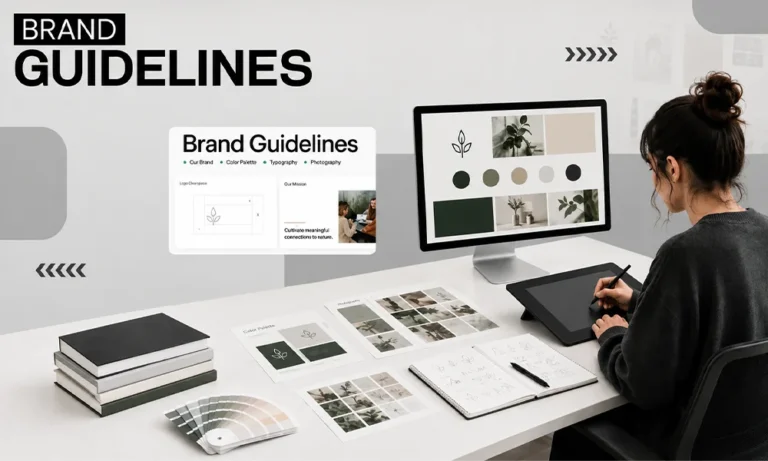
Brand guidelines are the instruction manual for your corporate identity, showing how to represent your business to the world. They contain clear rules for logos, typography, imagery, and tone of voice. Far beyond static PDFs of the past, modern brand guidelines in 2026 are real-time and programmatic frameworks hosted on design platforms like Figma or Frontify.
In this blog, I am going to show you what are brand guidelines, what is included in brand guidelines, and how to build them with brand guidelines examples, so your brand value remains strong.
What are Brand Guidelines for Your Business Growth?
Hearing the word “brand guidelines”, you might think of it as visual pictures showing how a company looks for brand standards, but it is much more than that. It’s a foundational growth tool that directly impacts your business mission and vision.
What are brand guidelines at core? They are the official set of rules that defines both visual identity and the communication rules of the business. This acts as your company’s absolute source of truth and ensures that every piece of content created by your team remains uniform and professional across the globe.
I have learned firsthand that visual consistency is not just an aesthetic choice; it is a direct driver of corporate revenue. When you establish design boundaries, you unlock scalable business growth through several ways:
- Gains Customer Trust: In the digital market, chaos breeds suspicion. When your website, products, packaging, and social channels match perfectly, it signals stability and professional maturity, bringing in customer trust.
- Increases Creative Production Speed: Strong brand presence means faster conversion of visitors into customers.
- Maximise Every Dollar of Marketing Spend: Visual identity is so strong that your brand is instantly recognisable, your marketing campaigns build compound interest in consumers’ minds, lowering your overall consumer acquisition costs over time.
What to Include in Brand Guidelines Document?
To build a uniform identity, you must know what brand guidelines should include to keep your team aligned. From my experience, understanding what elements should be included in a
brand style guide is important. So here are the seven core things your documents need to have.
1. Brand Story
When you start a branding project, you always begin here because you cannot design a look without defining the company’s soul. You lock down the mission and vision, so every creator knows why the business exists.
2. Logo Rules
The company logo must be treated as a sacred asset that can never be altered or stretched. You explicitly mark out the primary logo, horizontal variations, and exactly how much padding space must surround it.
For example:
- Apple demands a strict buffer of empty space around its minimal Apple icon in its logo brand guidelines.
- TaskCloud’s rebranding involved a logo design remake, which completely changed its brand presence.

3. Colour Palette
Slight shade variations can make a company look completely disorganised, so creative teams should never guess colour choices. Instead, it should be locked in the exact HEX and RGB codes with physical CMYK (Cyan, Magenta, Yellow, and Key) print formulas.
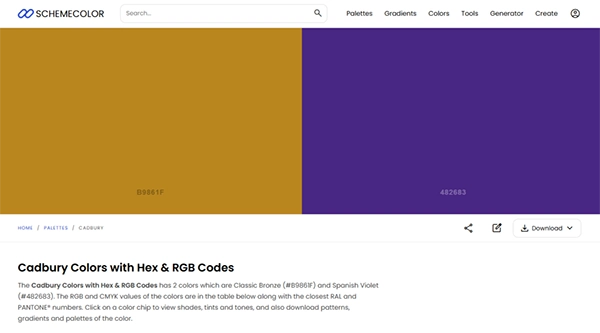
During our logo design case study brand identity overhaul for TaskCloud, we discarded a messy palette of random blues to lock in a single, high contrast HEX matrix across all media, much like how British chocolate Cadbury protects its royal purple hue worldwide.
4. Typography Hierarchy
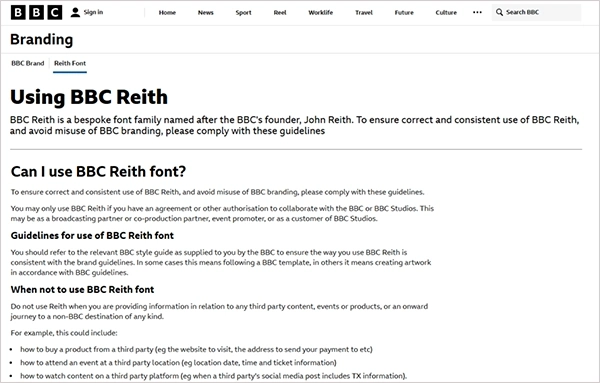
Organising font weights properly guides readers’ eyes from the big bold hook straight down to the body text without causing visual fatigue. Think about how the BBC in the UK uses its custom “BBC Reith” font family to maintain perfect reading structures across news, websites, and TVs globally.
5. Imagery Style
Though it is optional to add what kind of images to be used, it plays an important role. It explains how a brand uses photography, illustrations, graphics, and other imagery to add visual elements to the brand.
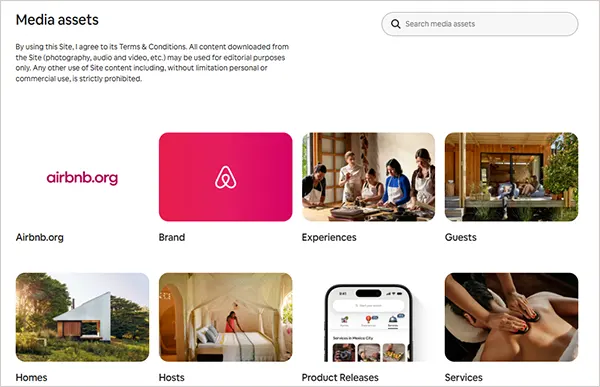
Let’s take the example of Airbnb, which uses natural light and eye-level candid shots of real people as brand media assets.
6. Iconography System
Making sure all your small digital symbols look similar helps users navigate your website or app without getting confused.
For example, Spotify uses the exact same rounded geometric shapes and line thickness for all the buttons inside its music app, so everything feels familiar.
7. Voice and Tone
Deciding how your business talks helps customers recognise your personality even if they do not see your logo. Look at Innocent Drinks, which uses a famous, fun and friendly tone on its juice bottles to connect with shoppers and stand out on grocery shelves.

How to Create Your Brand Guidelines?
To create your brand guidelines, you must organise your company’s design assets and communication rules in a centralised digital manual. Here you will learn how to make brand guidelines to abstract business concepts and make creative laws.
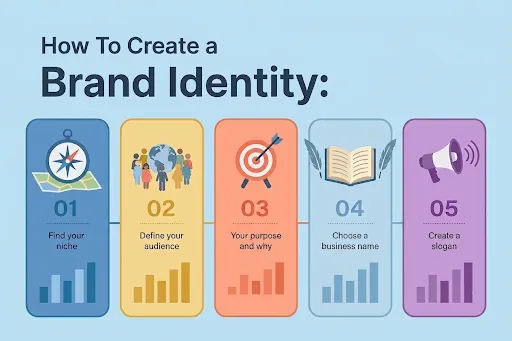
Step 1: Define Your Goal, Purpose, and Target Audience
To successfully begin your brand guidelines, you must begin with brand identity design that includes defining your core values, purpose and target audience. This means laying down a foundation so that every design choice made serves a specific market purpose.
- Establishing Core Goal and Purpose: Write down your brand’s mission statement and long-term vision so that everyone knows why the business exists and where it is going.
- Mapping the Target Audience: You build detailed buyer personas that define the needs and pain points of your ideal users. When you see your audience clearly, you can align your styles to appeal directly to them.
Step 2: Audit and Collect Existing Brand Assets
Collect every piece of creative material currently being used across your business channels and identify inconsistencies to improve. This step is important because you can’t fix the problem until you find where it actually exists.
For new brands, use this phase to perform a thorough competitive audit and reference materials from your industry.
Step 3: Codify Visual Identity and Verbal Tone Rules
Next comes writing down the rules that guide both your visual identity and verbal tone. This step is the core of your brand guidelines that turns just thoughts into something official.
- Setting the Visual Rules: You save the digital components that define your visual appearance. These include:
- Logo
- Space padding rules
- Primary and secondary color palettes
- Digital HEX and RGB codes
- Physical CMYK formulas
- Font families
- Typography size and weight
- Text formatting constraints (line height and letter spacing)
- Setting the Verbal Tone Rules: Provide clear “what to say” and “what to avoid” examples so writers keep their messaging perfectly uniform.
Step 4: Create Practical Resources and Document Templates
To make your rulebook functional, you must create a library of reusable layout templates and graphic resources for your team. It’s a one-time investment; you spend time once to make these assets, which will increase your daily content production speed.
Step 5: Deploy the Finished Systems
Publish and launch your finished guidelines onto an active cloud-hosted platform. If you keep your brand guidelines as a static PDF file, it will increase the manual work again.
- Hosting on Live Design Desks: Host your live-design system on spaces like Figma or specialised portals like Frontify so that workers can pull assets easily instead of copying and making them manually again.
Note: Hosting on digital live platforms removes the chances of manual copying mistakes and slight visual differences that always happen when teams try to recreate layouts from static PDFs.
Real World Examples of High-Performing Brand Guidelines
When you see the world’s top brands, you will realise that their global authority depends on how they guard their public presentations. A brand is known by how it looks first and then how it serves. Let’s look at how guidelines documents played a role in high-performing brands’ growth.
1. Coca-Cola
As one of the most recognisable icons in human history, their asset management guide is immensely strict. It details scaling constraints for classic Spencerian script logo, rules for the bottle silhouette, hardcoded palette featuring their signature “Coke Red” to protect their 130-year design evolution across global markets.
2. Apple
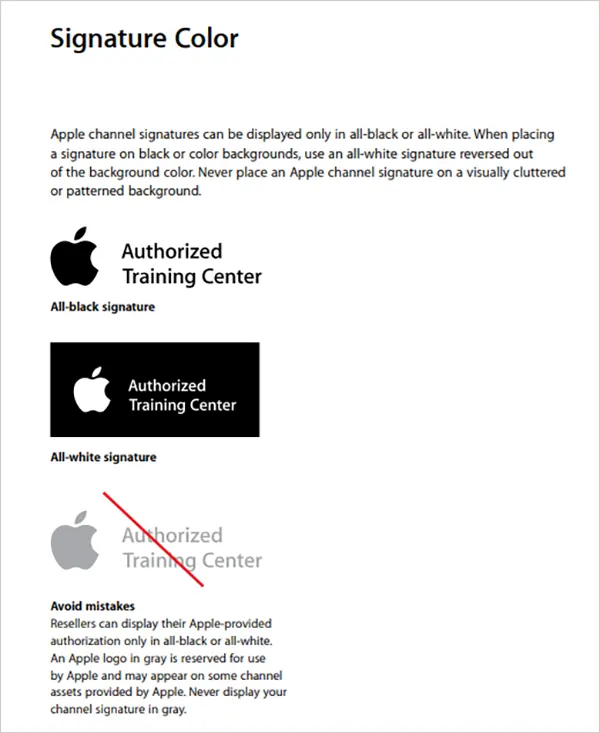
The global gold standard for minimalist visual consistency. Their digital design manual gives a mandated buffer of empty clear space around their corporate Apple icon and sets constraints for their clean white spaces, high-contrast imagery and San Francisco typography family.
Note: Many evolving organisations constantly rewrite their brand guidelines to match market shifts. For example, North Central College prioritised a name change as a central move to refresh its institutional brand identity.
3. Nike
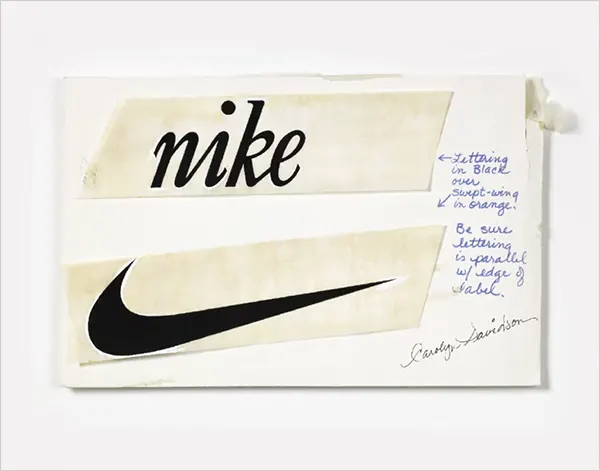
As one of the rare global brands that can be recognised instantly by just a single symbol, their branding guidelines are much different. Behind that iconic “Swoosh” logo, which officially celebrated its 50th anniversary in 2022, lie detailed guidelines that protect its cultural power.
Exact angle, placement, and clear space, everything ensures that their marketing remains flawless and catchy.
Conclusion
Brand guidelines are what make a brand an actual brand. Without any brand guidelines, there is no consistency and a definite image of your brand. This rule book separates the messy site from a real professional business that people trust.
Remember, every brand guideline should have these 7 core elements (brand story, logo, colour palette, typography, imagery, iconography and voice rules).
Frequently Asked Questions
Q1: What are brand guidelines?
Brand guidelines are a set of rules that define how a brand should look and communicate with its users. They help maintain consistency in logos, colours, typography, imagery, messaging, etc.
Q2: What are the 7 elements of brand?
The 7 core elements of brand are:
- Brand story
- Logo rules
- Color palette
- Typography
- Imagery
- Iconography
- Voice and tone
Q3: How important are brand guidelines?
Brand guidelines are highly important because they form the rulebook for the brand’s visual and verbal identity. With this, no matter who is creating content, the brand remains professional across all platforms.
Q4: What’s the difference between brand guidelines and a design system?
Brand guidelines focus on the brand identity (mission, values, logo usage, colour palette, etc). They are used primarily for marketing and communication. The design system focuses on product development (UI components, code snippets, UX patterns, etc.). It is a library used by designers and developers to build similar digital products like apps or websites.
Q5: Why are brand guidelines important for businesses?
Brand guidelines give a consistent customer experience, strengthen the brand’s identity, build trust, and make it easier for teams to create professional marketing materials.
Q6: Why are brand guidelines needed?
Brand guidelines are needed to provide clear instructions so teams know which fonts to use and protect the brand’s value.