

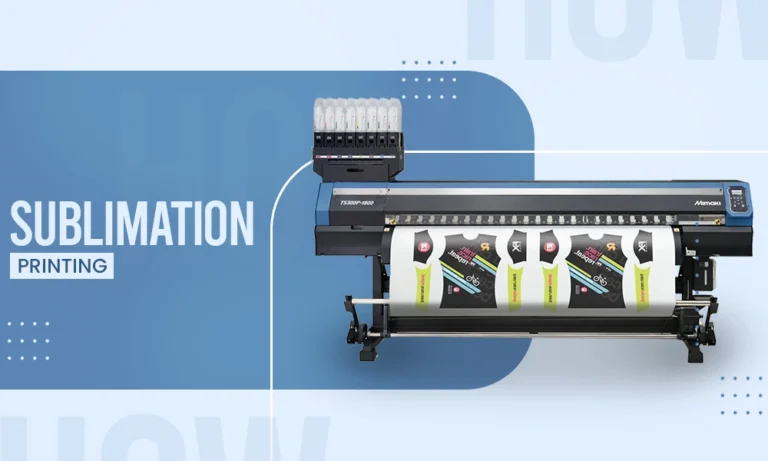
Sublimation printing is an electronic print process using the application of heat to create a gaseous dye from a solid state. The dye then bonds directly onto polyester fabric or specially treated surfaces. Unlike traditional methods such as painting or applying vinyl to a surface, the dye actually forms a permanent bond with the material; therefore, the dye does not flake off, crack, or fade, similar to many other printed materials.
You may have seen examples of sublimation printing when you see a picture baked onto the inside of a coffee mug (a photograph) or a running shirt with an image covering every inch of the garment (from the hem up). These are examples of sublimation printing in use.
Quick Answer:
Sublimation printing uses heat and pressure to turn solid dye directly into the gas phase and bond permanently to polyester or products coated with polymers. This requires a sublimation printer, special ink, transfer paper, and either a heat press or sublimation oven. The result is a vivid and durable print that becomes part of the material rather than a top layer.
What Is Sublimation Printing?
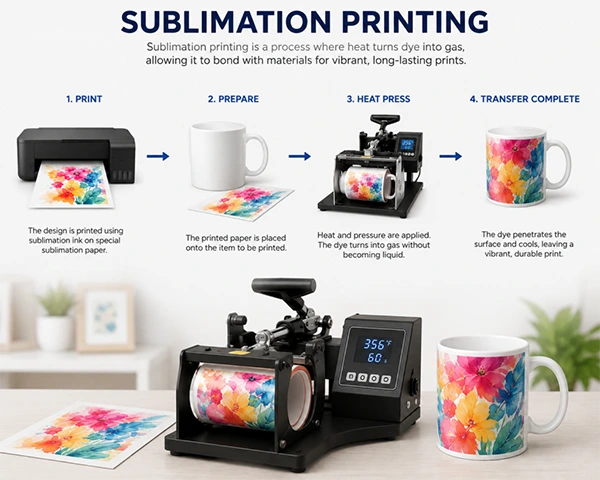
Sublimation printing, also called dye sublimation printing, is a heat transfer process that permanently dyes polyester fabric or products using a phase change to gas. It’s popular among sellers via print on demand, sportswear brands, and crafters because it produces high-quality photos all over without the texture or cracking that you get from screen printing or vinyl.
If you’re still comparing options, our guide contrasts offset, digital, and other common methods with sublimation.
Definition: Sublimation is a physical process in physics where solids directly transform into gases, and this same principle is used in printing to embed solid dye into material fibers using heat.
Printing people sometimes mistakenly spell this as “sublimination printing” or “sublimination print,” but there is no middle “n.” The right term is just sublimation.
Pixifyo Tips:
Make sure you spell it correctly when looking for supplies or tutorials, “sublimation” not “sublimination.” Search engines and marketplaces will treat these terms separately, and you’ll have far fewer problems finding what you want (and be less likely to be ripped off by knockoffs) if you use the proper term.
How Does Sublimation Work?
Sublimation skips straight to the gas phase and avoids liquid altogether. Most things go solid to liquid to gas. With dye sublimation, special dyes go directly from solid to gas when heated. This lets them enter tiny open pores in polyester or polymer coatings.
When cooled back down, the gas solidifies inside those pores permanently. Unlike screen printing, where ink is laid on the surface as a layer, with sublimation color becomes part of the material itself, so there’s nothing to pull off, scratch, or touch.
What Is a Sublimation Printer?
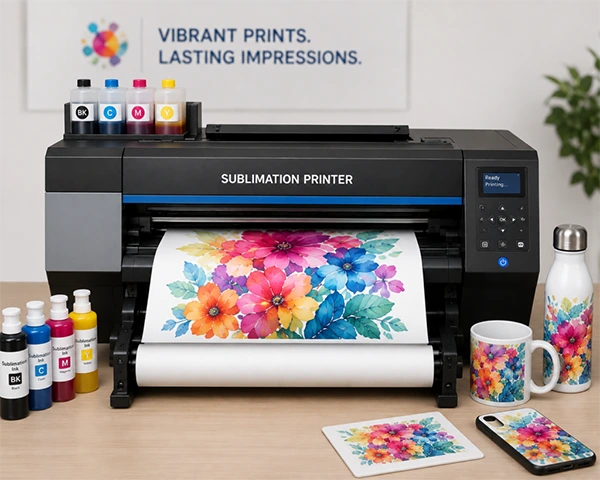
A sublimation printer is an inkjet printer that has been modified to have sublimation ink rather than standard ink. The main reason for this modification is so that you may produce a mirror image of your artwork on sublimation paper. There are several different entry-level models available, such as converting a new Epson Eco Tank printer to be used with Sublimation Ink and purchasing a printer specifically designed by Epson, the Sure Color F170.
Many small businesses begin using the Sure Color F170 as their first “true” sublimation printer because when you purchase one, they come ready to go right away from the factory.
What Is Sublimation Ink?
Sublimation ink is a type of dye-based ink that will transition from a solid to a gas state at temperatures of about 375–400°F (190–204°C). It is different from pigment-based inks because while those types of inks are simply printed onto the top layer of a substrate, sublimation ink actually bonds chemically with both polyester and certain specially-coated polymers.
Most commonly found as CMYK (Cyan-Magenta-Yellow-Black), sublimation ink does not have a white version available for printing. Therefore, you will always see the color of your blank base material.
The Sublimation Printing Process, Step by Step
There are several phases of sublimation printing: print, tape, press, and peel. These are the ways that they work.
- Design and mirror your artwork: Make sure you have created your art in Canva or Photoshop, etc. Most sublimation printers will flip your image automatically; however, be certain that this is enabled by default, otherwise your text may appear reversed.
- Print onto sublimation transfer paper: Using your sublimation printer and sublimation ink, print the image onto the special coating transfer paper.
- Position and secure the transfer: Trim the print, then place it onto your blank (t-shirt, mug, tile, tumbler, etc.) and use heat- resistant tape to ensure the print does not move during the pressing phase.
- Apply heat and pressure: Use either a Heat Press (flat/soft) or a Sublimation Oven (curved/symmetrical) at 375-400 F for about 1 minute to as long as needed to achieve desired results based on the type of material.
- Peel and cool: Remove the paper from the blank when finished; allow the item to cool down completely before handling.
Pixifyo Tip:
Before you commit to printing your last copy, run a test on scrap paper and a spare blank. A ten-second difference in press time or temp or 1/8 inch lower in pressure can cause an incredible difference in color output from very vibrant to very faded.
What Can You Sublimate On?
Sublimation will work on polyester fabrics (and high polyester blends), as well as on plastic items that have a special coating. The dye has to have something for it to bond to. This is the main rule for sublimation.
- T-Shirts, Jerseys, Leggings, Swimwear (100% Polyester or High-Poly Blends)
- Coated Mugs, Tumblers, Water Bottles
- Pillow Covers, Blankets, Coasters, Wall Tiles
- Phone Cases, Mouse Pads, Key Chains, Coated Aluminum Sheets
- Banners, Soft Signage. If you are printing banners next, please view our standard banner sizes guide before you buy your blanks.
Cotton, leather, and untreated wood or metal won’t work. The fibers or surface simply won’t accept the dye.
Real-World Sublimation Print Examples
Learning through real brands using sublimation speeds understanding more than definitions ever could. Here are a few to know:
- Sports uniforms: Nearly all modern team jerseys use sublimation because it lets you use unlimited colors and cover the whole body without adding bulk or weight to performance fabric. That’s why the sports apparel industry relies heavily on this for most team uniforms today.
- Etsy and Shopify: Etsy businesses use sublimation cheaply to test new designs without keeping inventory.
- Automotive interiors: Beyond apparel, sublimation is now used for a meaningful share of components like seat covers and dashboard trim thanks to its resistance to sunlight and wear.
- Print on demand storefronts: Platforms such as Printful use sublimation (along with “all over print” sewing variation) to fulfill one-off custom orders for shirts, leggings, and bags without having a warehouse full of pre-printed inventory.
- Marketing collateral: Soft signage and fabric displays are increasingly used alongside traditional printed materials if you are planning a full campaign. We have guides for poster sizes and brochure sizes that can help you plan other print assets as well.
Pixifyo Tip:
If you are picking your first product to sell, tumblers and coasters are a good starting point. They are forgiving of small design mistakes and inexpensive per unit and allow you to learn timing for heat pressing before you invest in more expensive blanks for apparel.
Sublimation Printing vs. Other Printing Methods
Sublimation printing stands out from other methods mainly in durability, range of colors, and compatibility with materials. Here’s how it compares to the most often compared methods.
| Feature | Sublimation | Screen Printing | DTG (Direct-to-Garment) | Vinyl (HTV) |
| Best material | Polyester / poly-coated items | Cotton, blends | Cotton, cotton blends | Almost any fabric |
| Color limit | Unlimited colors | Limited (per screen/color) | Unlimited colors | Limited, one layer per color |
| Feel on fabric | No texture, fully embedded | Slight texture | Slight texture | Noticeable layer |
| Works on dark fabric | No (needs white/light base) | Yes | Yes | Yes |
| Best for | Full-color, all-over designs | Bulk orders, few colors | Small-batch, photo designs on cotton | Simple shapes, names, numbers |
| Setup cost | Low to moderate | High (screens per color) | Moderate to high | Low |
Go with sublimation for bold designs all over polyester or hard coated items; go with screen printing for bulk orders of cotton; go with DTG for realistic photos on cotton; go with vinyl for simple, low-cost designs like names and numbers. For a broader look at where these different methods fit into the bigger picture of printing, check out our guide on types of printing.
Pros and Cons of Sublimation Printing
Sublimation printing offers vibrant color and long-lasting durability, but it comes with real material restrictions.
| Pros | Cons |
|
|
Final Thoughts
Sublimation is a popular method of producing high-quality images because it produces vibrant, full-coverage, and permanent prints compared to many other methods of printing, provided you are using the proper substrate. Once you have an understanding of the sublimation process, there will be only one variable controlling your final product, which is simply practice applying heat, time, and pressure.
FAQs
Q1: What does sublimation printing really mean?
Sublimation printing is a type of printing where solid dye is heated to produce a gas, and this gas attaches to polyester fabrics and other materials with polymer coatings by bonding directly into the material rather than simply being applied on top like most inks and paints.
Q2: How does sublimation differ from regular printing?
Regular printing techniques (i.e., screen printing, direct-to-garment), deposit ink onto a material, whereas sublimation dyes are absorbed into a material to become one with it. As such, sublimation-printed designs cannot crack, flake, or wash away when washed.
Q3: Can I use sublimation to print on cotton?
No. To be able to absorb into the fibers of a material and adhere well enough to withstand repeated washing and still look good after numerous washes, the dye used in sublimation printing requires the presence of polyester fibers or some sort of polymer coating. If you were to apply sublimation dye to 100% cotton, the dye would instantly fade/bleed upon the first wash cycle and could be entirely removed.