

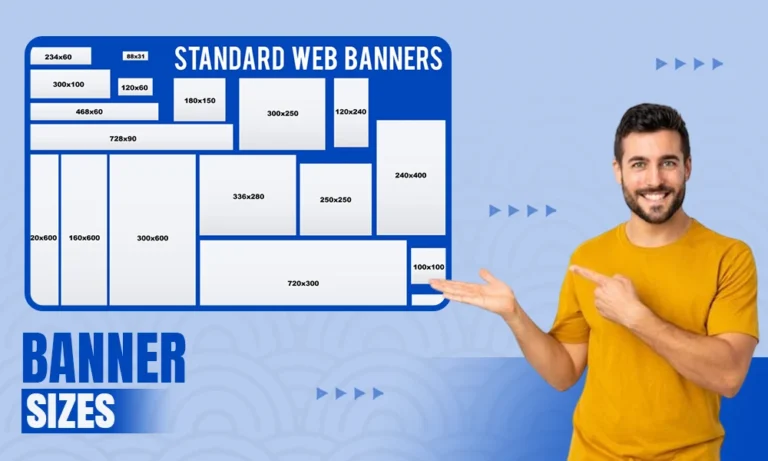
Standard banner sizes include everything from smaller 2′ x 4′ interior display banners up through larger 6′ x 12′ exterior display banners. However, the best banner size is generally the 3′ x 6′, which serves as an ideal general-purpose banner. Ultimately, your decision in selecting a banner size should be based upon three elements.
(1) Location where the banner will hang
(2) the distance that viewers are viewing from
(3) message that needs to be communicated.
Over the years, we have created hundreds of banners, and the biggest problem we have seen people make is choosing the wrong size prior to thinking about the area. When you choose the correct banner size, the design becomes a secondary concern. So, get the size of the banner right first, and the design almost designs itself.
Quick Answer:
Small banners in sizes like 2′ x 4′ or 2.5′ x 6′ work well for counters, windows, and tabletops. Medium or standard banners, typically 3′ x 6′ or 4′ x 8′, are best suited for storefronts, market stalls, and fences. If you need something bigger, large banner sizes in 5′ x 10′ or 6′ x 12′ are ideal for parking lots, grand openings, and highway visibility. And for indoor events or trade shows, vertical or retractable banners around 33″ x 80–81″ are the go-to choice.
What are Standard Banner Sizes?
There is no one-size-fits-all standard banner size. However, there are only a few banner sizes that can meet nearly all your needs. The best way to think about this is as a start-up menu for you to personalize.
| Banner Sizes Chart | ||
| Category | Common Banner Dimensions | Best For |
| Small banner | 2′ x 4′, 2.5′ x 6′ | Checkout counters, windows, and tabletops |
| Medium/standard banner | 3′ x 6′, 4′ x 8′ | Storefronts, market stalls, fences |
| Large banner | 5′ x 10′, 6′ x 12′ | Parking lots, grand openings, roadside |
| Vertical/retractable banner | 33″ x 80″–81″ | Trade shows, conference booths, pop-ups |
| Feather flag | 24″ x 81″ (wing shape) | Outdoor events, parking lots, curbside |
| Teardrop flag | 32″ x 70″ | Windy outdoor spaces, retail entrances |
Pixifyo Tip: When determining what banner size is best for you, first think about how far away viewers will be able to view the banner. The greater the viewing distance, the greater the banner and font sizes need to be so that everyone can clearly view all information.
Also Read: Detailed Guide about Poster Sizes: Dimension, Uses, Impact, Benefits and Criteria
Most Common Standard Banner Sizes and What They’re Used For
Some of the most common standard banner sizes are small banners (2′ x 4′, 2.5′ x 6′), medium banners (3′ x 6′, 4′ x 8′), large banners (5′ x 10′, 6′ x 12′, or larger), and vertical banners & retractable banners. Let’s have a deep look at these.
1. Small Banners (2′ x 4′, 2.5′ x 6′)

The small banner works well for a small messaging space. Examples include checkout counters, table tops, or windows, which will allow you to be able to go directly to them to read the information. For banners use one line per banner as much as possible, especially on an 8 sq. ft. piece of vinyl.
2. Medium Banners (3′ x 6′, 4′ x 8′)
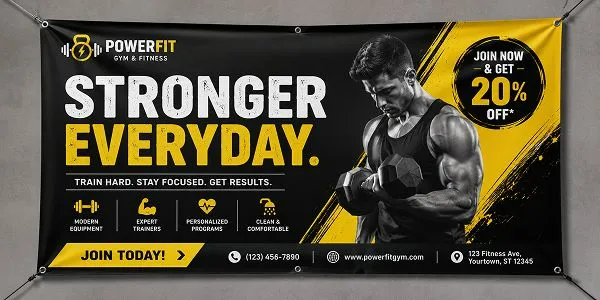
Medium banners are typically 3’ x 6′ or 4’ x 8’. The medium banner size is what many small business owners select, as it offers both visibility and portability. 3’ x 6’ banners can be found frequently on shop windows and market stalls, and also mounted along fences, as there’s just enough area for an eye-catching headline, a graphic element, and a contact number so the message isn’t too cluttered.
3. Large Banners (5′ x 10′, 6′ x 12′, or Larger)
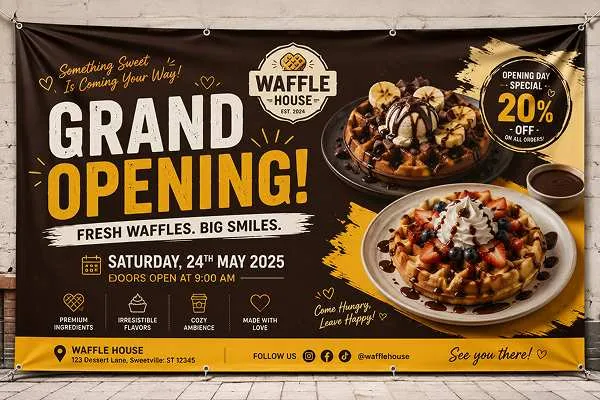
There are obviously times when you will want to reach out to people who may be far away from your physical location and/or moving quickly through the area. For instance, if someone is going by your building at 30 miles per hour or looking over a parking lot at you, then you’ll probably want to use a larger banner to offset the loss of visual clarity due to the distance.
In addition to its durability and ability to withstand the elements, vinyl is the preferred material for large outdoor banners. If you’re curious how it stacks up against other options, our guide to types of printing breaks down the methods and materials.
Pixifyo Insight: Bigger doesn’t mean that it is necessarily better. In a storefront, a 6′ x 12’ banner displayed in a small window will appear. cluttered and inexpensive.
Make your banners as big or as small as necessary based on where you plan to display them.
4. Vertical Banners and Retractable Banners

Standard sizes for vertical banners tend to be approximately 33″ x 80″–81″. This gives you a lot of room vertically to create an effective design for use at trade show booths or for temporary pop-up events.
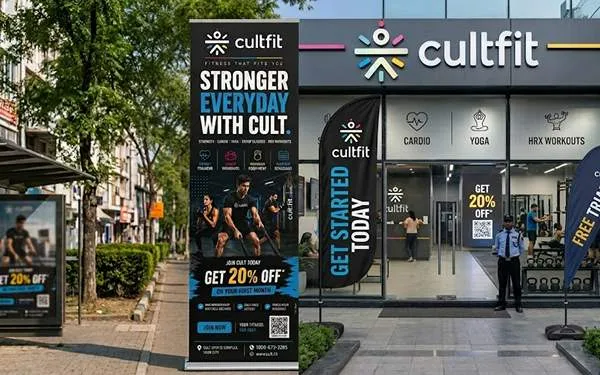
The retractable banner stand is also very convenient, since you can simply roll them back up after using each one, which is great when you have several events scheduled per month.
Feather flags (24″ wide x 81″) and teardrop flags (32″ wide x 70″) are the outdoor versions of retractable banner displays. Both are designed to get noticed by consumers while also being able to withstand windy conditions.
Examples of where feather flags or teardrop flags would be used include, but are not limited to, farmers’ markets, car dealerships, grand opening celebrations, etc.
Why Banner Sizes Matter
Your banner size decision depends upon more than just the physical fit of your content; it will determine the true experience your audience has with your message. It’s either getting lost within an area full of other messages (too small) or is so big for the space that it appears overwhelming or unprofessional.
The Viewing Distance Rule
There’s a basic rule-of-thumb used throughout the advertising industry. Figure about 10 feet of viewing distance for each inch of letter height. Thus, six inches of letter height can be read approximately sixty feet away.
The farther back your audience is from your sign when traveling at highway speeds, the larger your letter heights should be and, therefore, the larger your banners.
Fun Fact: The “10 feet per inch” rule originally came from the study of how far people could read signs when driving (legibility) and at what speed. That’s why the large highway billboards we all know so well use letters that are completely unreasonably large compared to indoor displays.
Also Read: What is the Brand Design Process? Learn with Examples And Suggestions
How to Choose the Right Banner Size for Your Business
Before choosing your banner size, make sure you have considered the physical space and location, viewing distance, audience, banner purpose, and design for the banner dimensions of your banner size.
- Know Where You’ll Place Your Banner: Determine the exact location where you want to place your banner, such as against a wall, near a window, at a fence, etc. Also, determine if it will be placed indoors or outdoors. The placement of the banner can eliminate half of the possible sizes shown on most size charts.
- Determine How Many People Can See Your Banner & How Far Away They Are: If people are walking down a sidewalk, they may see your banner from further away than those who are seated in an auditorium or behind a steering wheel. Ensure that the banner size is appropriate for how far away your target audience will be viewing your banner.
- Identify Why You Want to Use a Banner: Do you want to create awareness of a limited-time offer (such as a single-day flash sale)? Or do you want to increase brand awareness? Make sure to identify why you want to use a banner prior to determining its size.
- Create a Layout That Is Suitable For Your Size Choice: Your font size, picture quality, and design elements should match the size of your banner. Provide adequate space between each element of your design, and do not overload your banner with too much information. Sticking to your brand guidelines for colors, fonts, and logo placement will also keep your banner consistent with the rest of your marketing. Be sure to clearly convey your primary message.
Mistakes to Avoid When Choosing a Banner Size
Mistakes like cheap and budget-friendly banner sizes, cluttered banner designs, neglecting wind loads, and not reviewing the design before ordering can lead to disastrous results. Let’s see how.
- Only choose a banner size by price: Do not choose a banner size based purely on budget, without checking it against the actual space or viewing distance. If you have a “discounted” banner that is unreadable at 20 feet from where people will be standing, then you are simply wasting money.
- Too many words or pictures in small banners: Overcrowding small banners with too much text or too many images can make it look cluttered. It may lead to a small retention rate of your banner, leading to people ignoring and not remembering your banner.
- Neglecting to consider wind loads on larger exterior banners: Your printer should tell you whether they use grommets or mesh in their banners intended for high-wind areas.
- Not reviewing the design prior to ordering: The design may appear correct on your computer monitor at 8.5″ x 11″. However, as soon as you scale it up to 6 ft wide, it will likely be cropped or blurred if you haven’t followed the right steps for prepping images for print with basic photo editing.
Also Read: How To Fix Grainy Photos? Methods, Hacks, and Suggestions
Conclusion
Getting banner sizing right is 80% of the design before you open any design tool. Start by considering the space and viewing distance, and lean towards standard banner sizes unless your setup really calls for custom sizing. Both your wallet and turnaround time will thank you.
If you are planning your next banner and want another set of eyes to check sizing before printing, reach out to us with your space measurements. We would sanity check sizing before it goes into production.
FAQs
Q1: What are standard banner sizes?
Banner sizes can vary; however, the most commonly used standard banner sizes include 2’ X 4’, 3’ X 6’, and 6’ X 12’. These three sizes provide coverage of most types of both indoor and outdoor uses.
Q2: Which are the most popular banner sizes?
The most versatile and popular standard banner size is the 3′ X 6′. The larger outdoor display options are the 4′ X 8′ and the 6′ X 12′.
Q3: How large should a typical vertical banner be?
Retractable and vertical banners generally range from 33″ x 80″ to 81″ high, creating an optimal tall canvas area for trade shows and pop-up branding areas.
Q4: How do I choose the right banner size to advertise my storefront?
Measure the amount of usable space you have on hand, as well as the distance at which potential customers will stand from the banner when viewing it. When sizing your text using the 10 feet per inch legibility rule.